
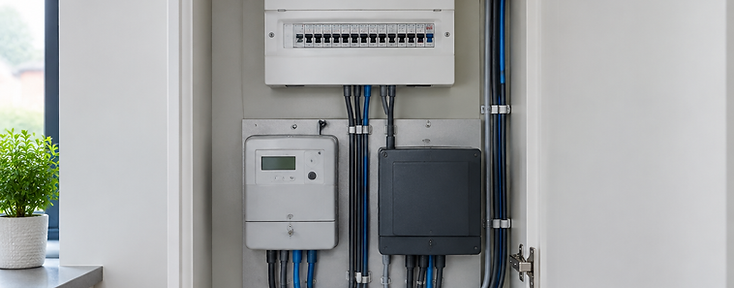
We talk through your usage, your meter type and the contract terms you are being offered, and explain the choices in straightforward terms so you can decide what suits your household.
Plain-English explanation
What unit rates and standing charges actually mean for you.
Meter type matters
Single rate, Economy 7 and smart meter differences explained.
No obligation
You are never under pressure to change anything.
Unit rate, standing charge and daily cost
The unit rate is what you pay for each kilowatt hour of electricity consumed. The standing charge is a fixed daily amount that covers the cost of supplying and maintaining the connection, and it applies whether you use any electricity that day or not.
Households that use very little electricity often benefit from a lower standing charge, while larger or all-electric homes usually benefit from a lower unit rate. A comparison prepared for a high user can therefore point in the opposite direction to one prepared for a low user.
- Low users generally do better with a lower standing charge.
- Higher users, including all-electric homes, generally do better with a lower unit rate.
- Standing charges vary by region because network costs differ across the country.
Meter types and how they are billed
How your home is metered affects which tariffs are available and how consumption is recorded.
- Single-rate meters charge one price for all electricity used.
- Economy 7 and similar multi-rate meters charge less for overnight use, and suit storage heating or off-peak water heating.
- Smart meters record and send readings automatically, and support time-of-use tariffs.
- Prepayment meters require credit to be added in advance, and some tariffs are not available with them.
Contracts, price changes and switching
Household tariffs are often fixed for a set period, after which the account usually moves to a standard variable rate. When a fixed term ends, nothing happens automatically: the account simply continues on the default arrangement unless you choose something else.
We explain the difference between fixed, variable and time-of-use tariffs, what a termination fee means, and what happens to your supply if you do nothing at all. If you decide to change tariff or supplier, the switch is arranged with your agreement and your supply continues as normal throughout.
Who we help with domestic electricity
Our domestic support is designed for households wanting a clearer picture before they decide.
- Homeowners reviewing a tariff that is about to end
- Tenants responsible for their own electricity account
- Households paying by prepayment meter
- All-electric homes with storage or immersion heating
- Households with a smart meter wanting to understand their options
- Anyone who has received a bill that does not look right
Eligibility and what to expect
Which household tariffs are available depends on your meter type, payment method, region and the supplier's own criteria. We will explain where a household may not be eligible for a particular option, and we do not guarantee that a change will reduce your costs.